19. Overview
Alpha Version: Work in progress.
This section provides a brief overview of the evolution of large language models (LLMs) since the landmark Transformer architecture, clarifying the positioning of GPT-1. It also summarizes the core architecture and key features of GPT-1.
19.1. LLM Evolution After Transformer
In just 16 months following the introduction of the original Encoder-Decoder Transformer (June 12, 2017), two prominent variants emerged: the decoder-based GPT-1 (June 11, 2018) and the encoder-based BERT (October 11, 2018).
During the first two years, BERT and its derivatives held a dominant position in the field. Over the subsequent three years, a fierce competition unfolded between the direct Encoder-Decoder descendants of the Transformer (such as T5 and GLM) and decoder-based GPT-style models. However, following the release of GPT-3, decoder-based LLMs became the dominant paradigm in the industry.
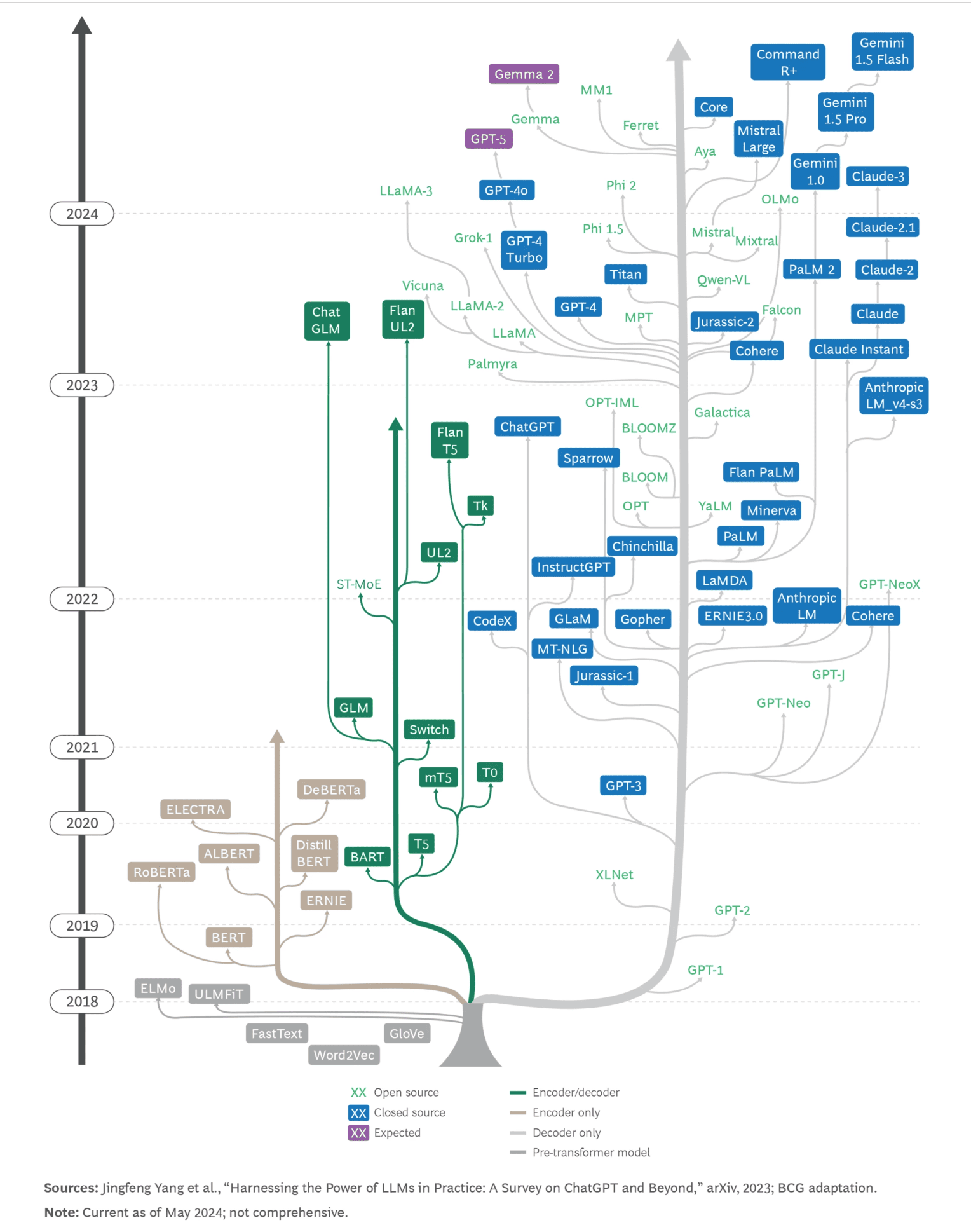
Refer to the original figure for details.
19.2. GPT-1 Architecture
The architecture of GPT-1 simplifies the standard Transformer’s decoder block. Each unit consists of a single Masked Multi-Head Attention (MHA) layer followed by a Feed-Forward Network (FFN), with both components integrated via residual connections. See Figure 19-1.
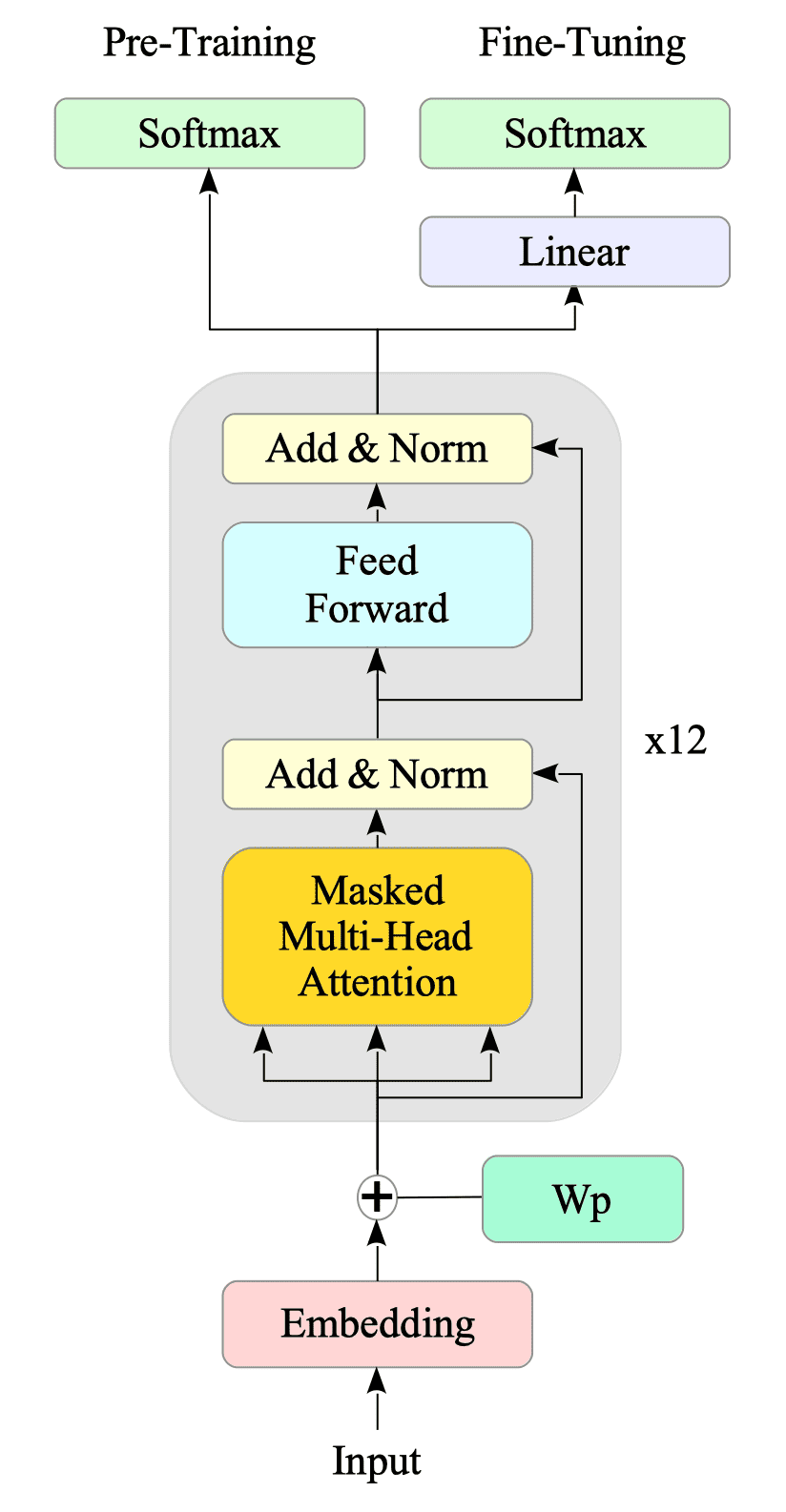
Fig.19-1: GPT-1 Architecture.
Compared to the original Transformer model, GPT-1 does not utilize sinusoidal positional encoding, but instead employs a learnable position embedding matrix.
Since these underlying core technologies were thoroughly covered in Part 4, the implementation details of the learnable position embedding are focused on in Section 20.2.
19.3. Pre-Training and Fine-Tuning
Despite having a simpler architecture than the original Transformer, GPT-1 outperformed it across a wider range of tasks. This success lies in its two-stage training methodology:
- (Unsupervised) Pre-Training: The model first acquires general linguistic capabilities through next-token prediction.
- (Supervised) Fine-Tuning: The model is then adapted to specific target tasks through supervised training on small, carefully curated datasets.
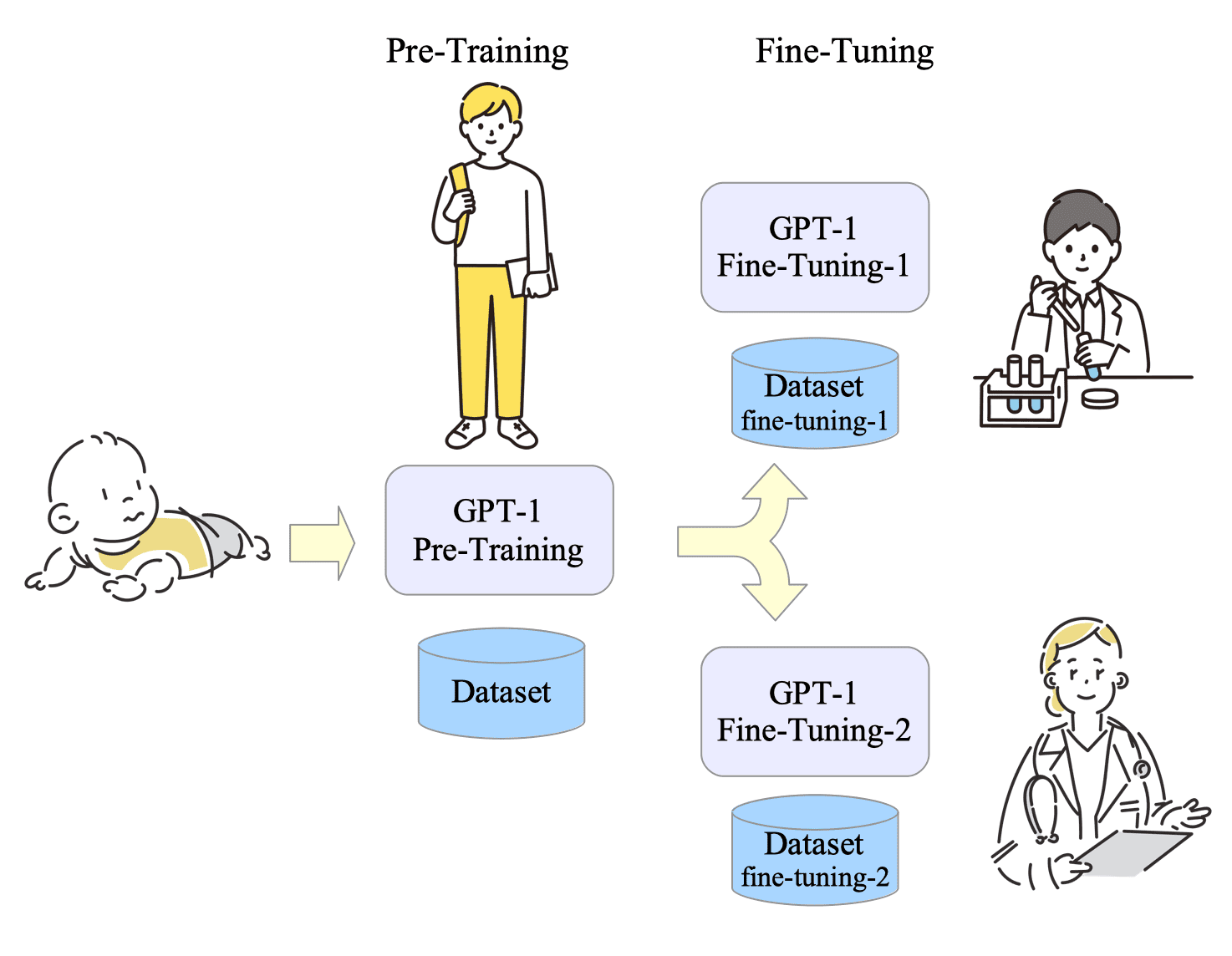
Fig.19-2: Conceptual analogy of GPT-1's two-stage training.
True to its name, “Generative Pre-trained Transformer”, this two-stage process is the core of GPT’s success. The model first grasps the fundamental structure of language through self-supervised pre-training, then masterfully specializes in targeted tasks via supervised fine-tuning.
By decoupling general language acquisition from task-specific training, GPT-1 achieved state-of-the-art (SOTA) performance across a broad spectrum of NLP tasks, including translation, inference, and question answering.
GPT-1 pre-training was described in the original paper as unsupervised pre-training. Today, however, this approach is more commonly referred to as self-supervised learning.
In this document, these terms are used interchangeably depending on the context. This approach is necessary because certain discussions require emphasizing the “pre-training” aspect of GPT, while others demand contrasting it directly with fine-tuning.