21. Fine-Tuning
Alpha Version: Work in progress.
Fine-tuning is the process of adapting a pre-trained GPT-1 model to a specific downstream task. After the language model has been pre-trained, GPT-1 is further trained using task-specific input examples together with their corresponding labels.
The original GPT-1 paper evaluated the model on the following four downstream tasks:
- Textual Entailment (Natural Language Inference, NLI)
- Question Answering (QA)
- Semantic Similarity
- Commonsense Reasoning
In this document, we implement the Natural Language Inference (NLI) and Question Answering (QA) tasks.
As an example, consider the Natural Language Inference task.
Given a Premise and a Hypothesis, the objective is to determine whether their relationship is entailment, neutral, or contradiction.
For example, given the premise
- Premise: “A man is playing guitar on stage.”
the model should infer that the hypothesis
- Hypothesis: “A man is playing a musical instrument.”
is an ’entailment’, as illustrated in Figure 21.1 [1].
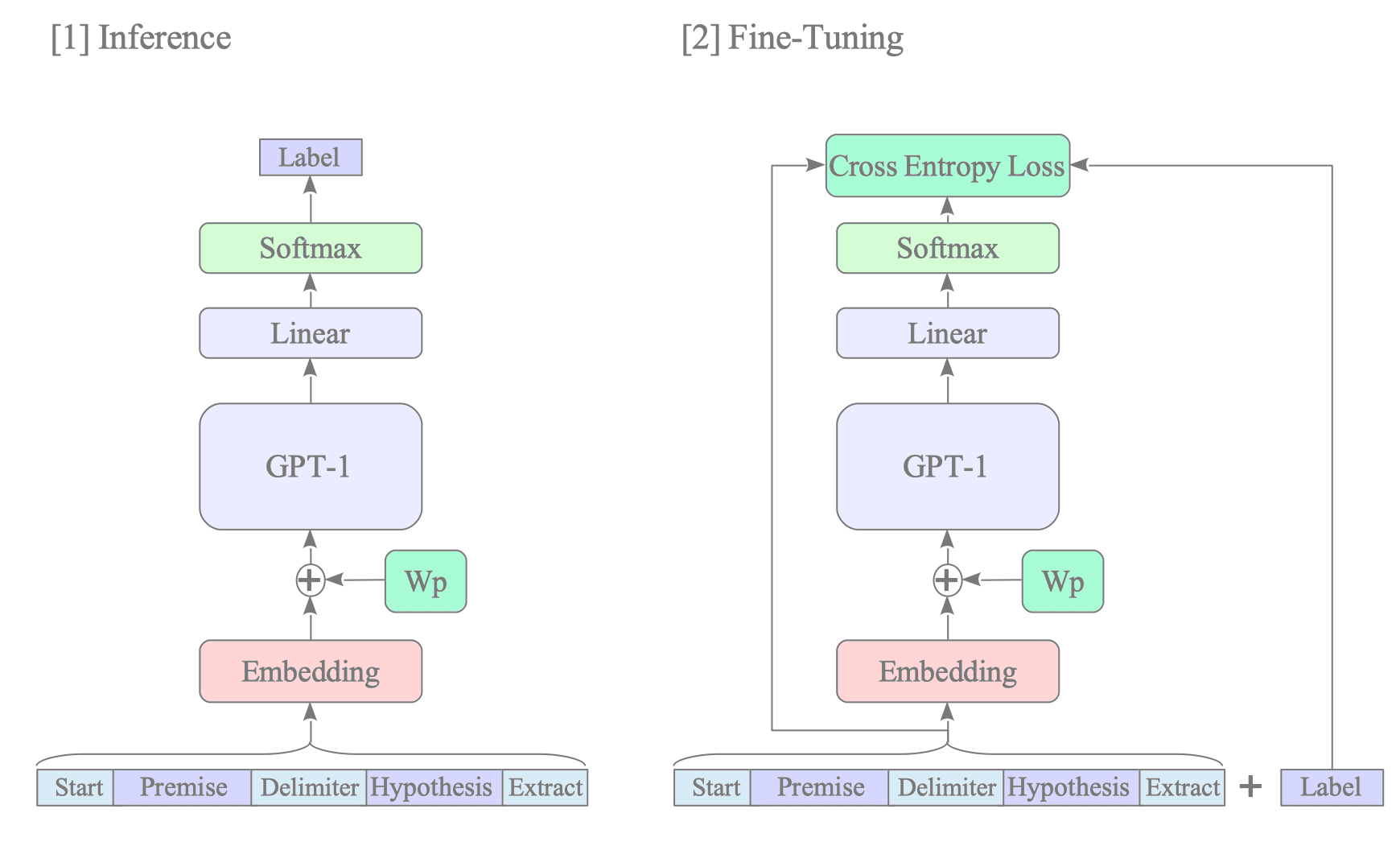
Fig.21-1: Example of a Natural Language Inference (NLI) Task.
To learn this task, the pre-trained GPT-1 model is fine-tuned using a large collection of Premise–Hypothesis pairs together with their corresponding labels, as illustrated in Figure 21.1 [2].
Examples of the training data are shown below.
- Example 1
- Premise: “Two dogs are running in the park.”
- Hypothesis: “There are animals outside.”
- Label: entailment
- Example 2
- Premise: “A man is playing guitar on stage.”
- Hypothesis: “The guy playing guitar is playing badly.”
- Label: neutral
- Example 3
- Premise: “A woman is cooking dinner in the kitchen.”
- Hypothesis: “No one is in the kitchen.”
- Label: contradiction
Section 21.1 presents the mathematical formulation of GPT-1 fine-tuning. Section 21.2 and Section 21.3 then describe the implementation of the Natural Language Inference and Question Answering tasks, respectively.